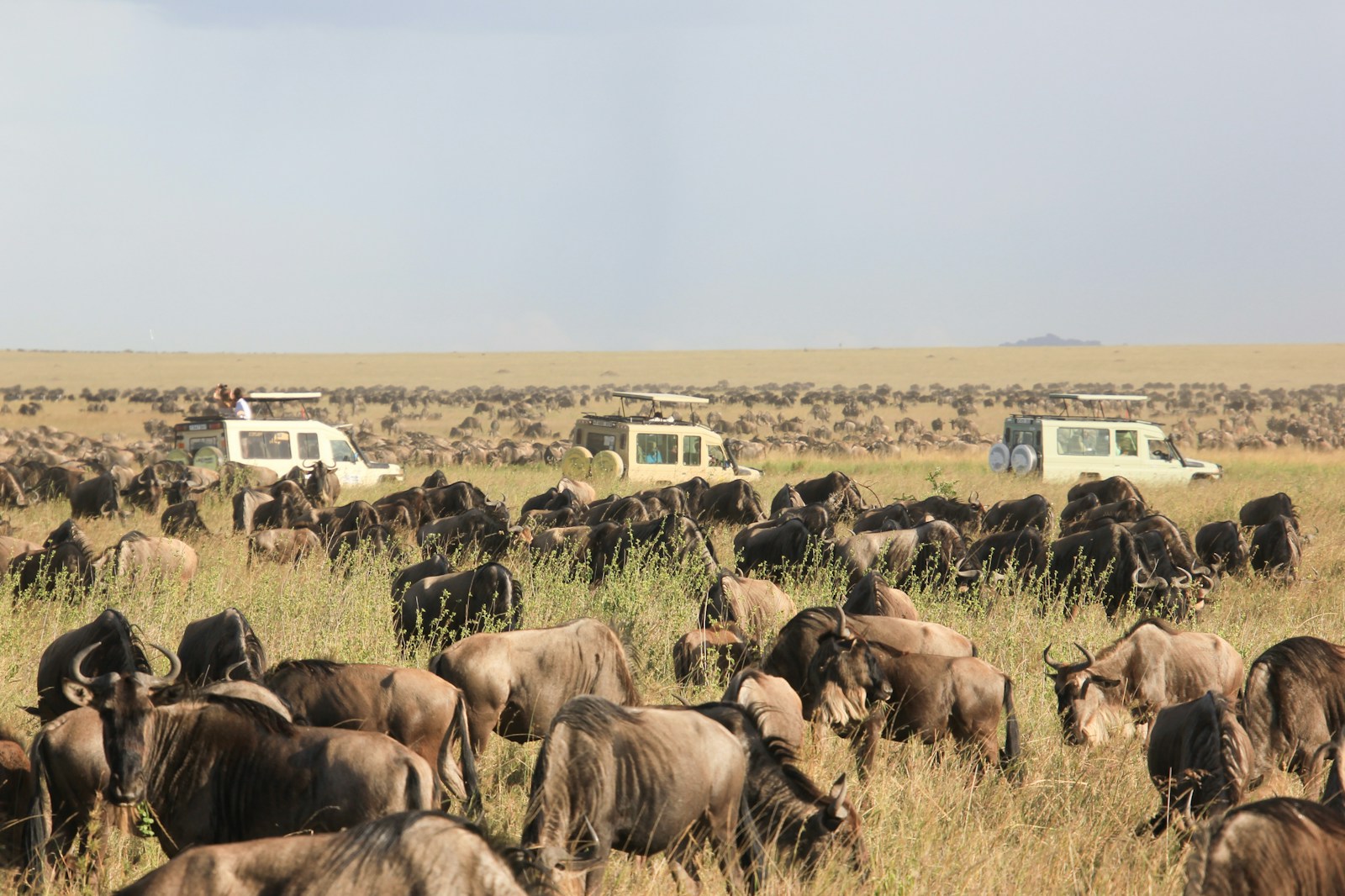
The Great Migration is not a single event; it is a 1,800-mile circular odyssey driven by instinct, weather, and the quest for survival. At Reimagining Travel, we view this phenomenon through the lens of our “Sustainable Symphony”—an orchestrated movement where every species plays a vital role in the ecosystem’s health.
If you are planning a “Premium Tailor-Made Expedition,” timing is everything. While the herds are always moving, their location depends on seasonal rainfall. Use this data-driven breakdown to align your journey with the specific experience you crave.
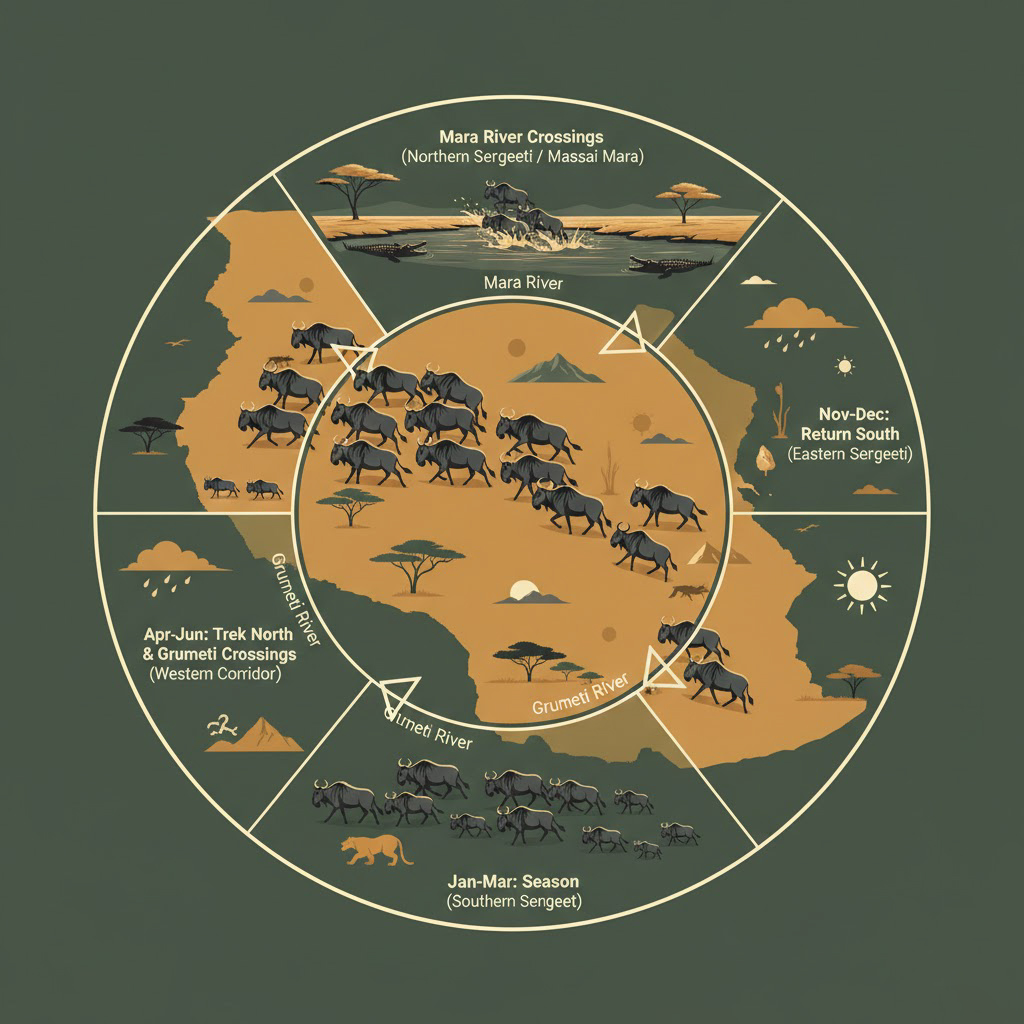
The Greate Migration at a Glance: Monthly Movement Data
Phase | Months | Primary Location | Key Wildlife Event |
|---|---|---|---|
The Calving Season | Jan – March | Southern Serengeti / Ndutu | 500,000+ calves born; peak predator action. |
The Trek North | April – June | Central Serengeti / Western Corridor | “Mega-herds” form; first river crossings (Grumeti). |
The Great Crossing | July – Oct | Northern Serengeti / Mara River | Iconic, high-drama river crossings (Crocodiles). |
The Return Journey | Nov – Dec | Eastern Serengeti / Central | Herds move south following short rains. |
Phase 1: The Circle of Life (January – March)
Best for: Wildlife Safaris, Family Holidays, and Photography.
In the nutrient-rich plains of Ndutu and the Southern Serengeti, the “Sustainable Symphony” begins its most tender movement.
The Data: Approximately 8,000 wildebeest are born every single day during the peak in February.
The Experience: This is a predator’s paradise. Lions, cheetahs, and hyenas are highly active, making it the best time for those seeking raw “force for good” conservation stories and high-action photography.
Reimagining Tip: Consider a Wellness Safari during this time. The lush green landscapes and the sight of new life offer a profound sense of renewal.
Phase 2: The Western Corridor (April – June)
Best for: Solo Journeys and Adrenaline Seekers.
As the “long rains” transform the Serengeti into a verdant emerald, the herds begin moving northwest.
The Data: The herds merge into columns up to 40 kilometers long, visible even from space.
The Experience: June marks the first major obstacle—the Grumeti River. While less famous than the Mara, the Grumeti crossings are intimate, dramatic, and far less crowded.
Sustainability Note: Traveling during this “Green Season” supports local communities during the off-peak period, ensuring stable year-round economic growth for our partners.
Phase 3: The Mara River Crossings (July – October)
Best for: Luxury Expeditions and Romantic Getaways.
This is the most iconic phase of the migration, where the herds face the crocodile-infested waters of the Mara River.
The Data: Over 2,500 crocodiles inhabit the river stretches, waiting for the nearly 1.5 million wildebeest to cross into the Maasai Mara.
The Experience: Pure adrenaline. Our “Premium Tailor-Made” approach ensures you have expert trackers who know the quietest crossing points, away from the heavy tourist traffic, maintaining our commitment to cultural and environmental respect.
Phase 4: The Short Rains (November – December)
Best for: Cultural Tours and Bird Watching.
Triggered by the short rains, the herds turn south once more, passing through the Eastern Serengeti.
The Data: The herds cover roughly 1,000 kilometers in their full annual loop.
The Experience: This is a time of transition. The air is clear, the dust has settled, and the migratory birds arrive in their thousands. It is a fantastic time for a Cultural Tour, as the herds move through areas where you can engage deeply with Maasai heritage.
Making Your Impact
Choosing when to go isn’t just about what you see; it’s about the footprint you leave. By selecting eco-lodges that prioritize waste reduction and local hiring, your expedition becomes a force for good.
Pro Tip: Because the migration is rain-dependent, the timing can shift by 2–3 weeks each year. We use real-time data and satellite predictions to adjust your itinerary, ensuring you are always in the heart of the action.